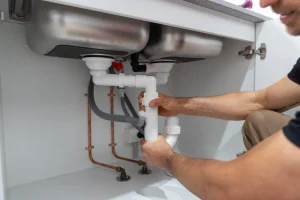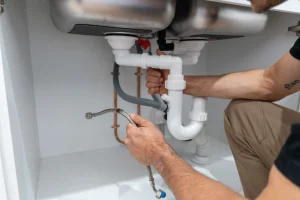
We can all agree that a leaking drain under basin or sink is one of the most common household plumbing issues. Kitchen and bathroom sinks,

Solar hot water gives you the lowest running costs of any system and attracts government rebates. Our licensed plumbers install and service solar hot water systems, handling the collectors, tank, booster and plumbing.
We install solar hot water across Brisbane, Perth and Adelaide, with an upfront fixed price and rebate advice.
We are local, licensed and insured plumbers who do this work every day, so we get it right the first time, with no mess and no surprises on the invoice.
Whatever the job, you get honest advice and a tidy, professional result.

Solar hot water uses the sun to heat your water, giving it the lowest running costs of any hot water system, since the energy is free once the system is installed. For a typical household, hot water is one of the biggest energy uses, so cutting that cost with solar makes a real difference to your bills over the years. Solar hot water also reduces your carbon footprint and attracts government rebates that offset the higher upfront cost. While it costs more to buy and install than an electric or gas system, the long-term savings are significant, especially for larger households in sunny areas. We supply and install solar hot water systems across Brisbane, Perth and Adelaide.
A solar hot water system uses collectors (panels) mounted on your roof to capture heat from the sun and transfer it to your water. The heated water is stored in an insulated tank, either on the roof with the collectors (a close-coupled system) or at ground level (a split system with a pump). For times when the sun is not enough, cloudy days, winter, or heavy use, a booster, electric or gas, tops up the heat to ensure you always have hot water. On sunny days the sun does most or all of the work, and the booster only kicks in when needed, which is what keeps running costs so low. We design the system to maximise the free solar contribution for your home.
Solar hot water comes in a few main configurations:
We will assess your roof, climate and preferences and recommend the right configuration, so your solar system performs well and suits your home.
Because the sun cannot always provide all your hot water, every solar system has a booster, and it can be electric or gas. An electric-boosted system uses an electric element to top up the tank when solar is insufficient, and is simpler where there is no gas. A gas-boosted system uses gas for the top-up, which is cheaper to run than electric boosting if you have a gas connection, and can use a continuous flow gas booster for efficiency. The choice depends on your energy connection and usage. We will advise which booster suits your home, so that on the days solar needs a hand, the top-up is as economical as possible, keeping your overall running costs low.
Solar hot water needs suitable roof space to work well. The collectors perform best facing roughly north (in the southern hemisphere) with a good tilt and unshaded exposure to the sun for most of the day, so shading from trees, other buildings or roof features reduces performance. The roof also needs to be structurally able to support the collectors, and for close-coupled systems, the weight of a full tank. If your roof is not ideal, a split system with ground-level tank, or choosing evacuated tubes, can help. We assess your roof orientation, tilt, shading and structure as part of the quote, and tell you honestly whether solar will perform well for your home or whether a heat pump might suit better.
Solar hot water systems attract government rebates that significantly offset the higher upfront cost. Federal small-scale technology certificates (STCs) provide a discount based on the system and your location, and various state schemes add further rebates, which together can be worth a substantial amount. Eligibility depends on the system, your location, and sometimes the system you are replacing. These rebates are a major reason solar (and heat pump) systems are more affordable than their sticker price suggests. We stay across the current schemes, let you know exactly which rebates your chosen system qualifies for, and apply them where we can, so the price we quote reflects the real, discounted cost, not a figure you have to chase later.
Solar and heat pump systems are the two most efficient hot water options, and both attract rebates, so it is worth knowing the difference. Solar uses roof collectors to heat water from the sun directly, with the lowest running costs, but it needs suitable, unshaded roof space and performs best in sunny conditions. A heat pump draws heat from the air and uses a small amount of electricity, so it does not need roof space, works day and night and in most weather, and is often simpler to install, though its running costs are slightly higher than a well-sited solar system. We will compare both honestly for your home, roof and budget, so you choose the efficient system that gives you the best value.
Sizing a solar hot water system correctly ensures you have enough hot water with maximum solar contribution and minimal boosting. The tank and collector area are matched to your household size and hot water usage, a larger household needs more collector area and a bigger tank to capture and store enough solar-heated water. An undersized system relies too much on the booster, eroding the savings, while an oversized one costs more than needed. Your climate and roof also factor in. We assess your household size, usage, roof and location, and size the collectors and tank accordingly, so your solar system provides plenty of hot water while the sun does as much of the work as possible.
Replacing a failed or old electric or gas system is the ideal time to switch to solar and slash your hot water running costs for years to come. Switching to solar involves more than a like-for-like swap, installing roof collectors, positioning the tank, and connecting the booster, so it is a bigger job with a higher upfront cost, but the rebates and long-term savings make it worthwhile for many households. We assess whether your roof and usage suit solar, handle the whole changeover from removing the old unit to commissioning the solar system, and apply the rebates. If solar is not ideal for your situation, we will say so and suggest a heat pump as the next most efficient option.
We manage a solar hot water installation end to end:
We handle the roof work, plumbing and any gas or electrical connections, and clean up afterwards.
Solar hot water has a higher upfront cost than electric or gas, typically ranging from around $3,500 to $7,000 or more installed before rebates, depending on the system type, size and installation complexity. However, government rebates can take a substantial amount off that, and the very low running costs save money every year thereafter, so over its life a solar system often works out cheaper to own than a system that is cheaper to buy. We give you an upfront fixed price with the rebates already applied, so you see the real cost, and we will explain the running-cost savings so you can weigh the investment against the long-term return for your household.
Like any hot water system, a solar installation must include a compliant tempering valve, which delivers water to your bathroom at a safe 50 degrees to prevent scalding, along with the correct relief valves, important for solar systems where water can get very hot on sunny days. Solar hot water installation involves roof work, plumbing, and electrical or gas connections for the booster, so it must be carried out by licensed professionals to be safe, compliant and to keep the manufacturer warranty valid. We fit all the required safety and tempering valves and provide the necessary compliance, so your solar system is safe as well as efficient.
Solar hot water installation is specialised licensed work involving roof collectors, plumbing, and electrical or gas connections, so it is never a DIY job. Our licensed plumbers and gas fitters install solar hot water systems to Australian Standards, size and position them for maximum solar performance, fit the required safety and tempering valves, apply your rebates, and provide compliance certification, and we back our workmanship. You get honest advice on whether solar or a heat pump suits your home, help with rebates, upfront fixed pricing, and a system built to deliver years of low-cost hot water. For a plumber near you for solar hot water, we cover Brisbane, Perth and Adelaide.
As a guide, $3,000 to $7,000 installed before rebates. After federal STCs of $600 to $1,000, most households pay around $2,000 to $6,000. We quote upfront.
Yes. Federal STCs reduce the upfront cost and are usually applied by the installer. State rebates may also apply, we will confirm what you qualify for.
Running costs are often just $100 to $300 a year, saving around $300 to $700 annually compared with a standard electric system.
Yes. An electric or gas booster tops up the temperature on cloudy days and in winter, so you always have hot water.
Thermosiphon has the tank on the roof with the collectors; split keeps the tank on the ground. We will advise which suits your roof and home.
A quality system typically lasts 10 to 15 years or more, and pays back the upfront cost in around 4 to 8 years through lower bills.
Yes. A compliant tempering valve is required on new installs to deliver water at a safe temperature, and we fit it as part of the job.
Yes. We install, service and repair solar hot water systems across Brisbane, Perth and Adelaide.

We can all agree that a leaking drain under basin or sink is one of the most common household plumbing issues. Kitchen and bathroom sinks,

Are blocked drains or damaged pipes disrupting your plumbing network? Get in touch with us at Same Day Trades for effective solutions at the earliest.
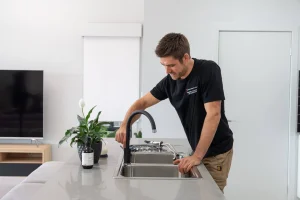
If you notice sudden leaks or rust-riddled water, it may be time to replace taps immediately. Fortunately, you have come to the right place. Contact

Pipes in the plumbing system of some homes may be blocked frequently due to various reasons. Sometimes roots may enter the pipes through the cracks
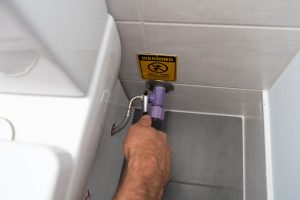
If you find constant puddles of water or condensation in a portion of the toilet, it means you’re dealing with a leaking toilet! There are
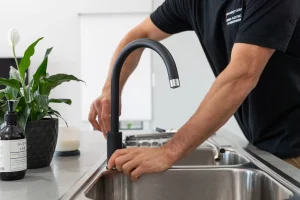
If your tap is faulty or looks outdated, you will want to replace it. And you’ve come to the right place for it! To install
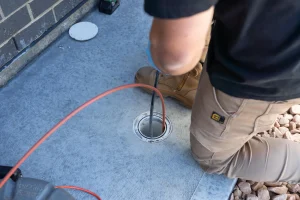
There can be multiple causes of a clogged drain, and it can prevent sinks and toilets from working. And snake down drains serve as excellent
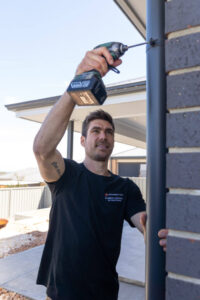
Downpipes carry rainwater from gutters and let it reach the soil to prevent it from splashing or dripping down the roof. This way, the extra

With hundreds of 5 star reviews, we’re the local tradesmen you can trust.

We make sure you know exactly what you are paying for ahead of time.
You’re in safe hands as our tradesmen are fully licensed and insured to do your job.


Our work will be free of defects in workmanship and workmanship will be warranted for life.

We offer convenient booking times that can be worked around your schedule.

We take calls 24 hours a day and 365 days a year so that we’re always available to be of service.

With hundreds of 5 star reviews, we’re the local tradesmen you can trust.

We make sure you know exactly what you are paying for ahead of time.
You’re in safe hands as our tradesmen are fully licensed and insured to do your job.

Our work will be free of defects in workmanship and workmanship will be warranted for life.

We offer convenient booking times that can be worked around your schedule.

We take calls 24 hours a day and 365 days a year so that we’re always available to be of service.